Media Regulation and Television Politics
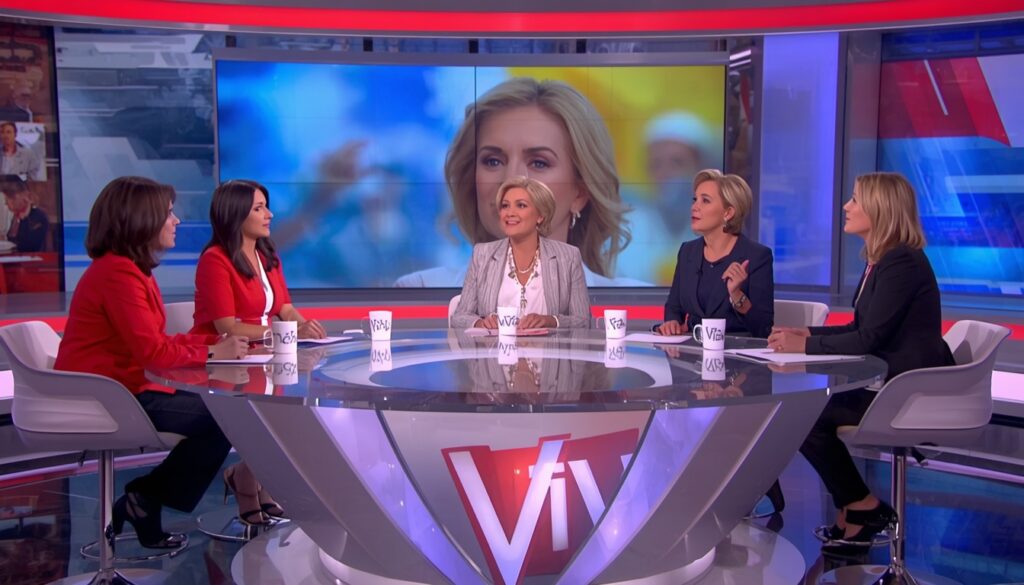
Recent coverage highlights adjustments within major U.S. television programming, particularly involving “The View,” which is reported to be recalibrating its approach to political guests amid increased regulatory attention. Discussions surrounding FCC oversight have intensified debate over the boundaries between entertainment programming and political content, reflecting a broader environment of scrutiny over media compliance and broadcast standards.
Analysts note that such adjustments are part of a wider trend in which legacy media platforms are increasingly sensitive to regulatory interpretation, audience polarization, and potential policy enforcement risks. This creates an environment where editorial decisions are influenced not only by audience engagement but also by institutional regulatory pressure.
Political Discourse and Public Communication
Former President Donald Trump continues to dominate segments of political media coverage, with multiple appearances and statements being broadcast through live events such as public luncheons and televised remarks.
Media commentary surrounding Trump’s public communication focuses on how political messaging is amplified through both traditional broadcast networks and digital platforms, often generating parallel interpretations depending on audience alignment. This reflects a broader shift in political communication where live statements quickly transform into multi-layered media narratives.
Additional political commentary circulating in media ecosystems includes references to Independence Day celebrations and broader debates over national symbolism. These discussions illustrate how cultural events are increasingly integrated into political framing, particularly in highly polarized environments.
International and Cultural Narratives
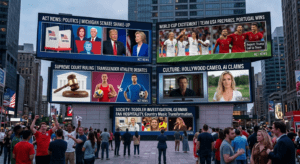
Sports and international governance remain recurring themes in media discourse. FIFA-related coverage continues to attract attention, including decisions involving player eligibility, disciplinary rulings, and public reactions from political figures commenting on sports governance.
At the same time, cultural reporting includes viral and entertainment-focused narratives, such as public reactions to athletes, celebrities, and media personalities. These stories often intersect with identity politics, national pride, and digital audience engagement.
Technology, Labor, and Economic Transition
A notable development in the technology sector involves workforce restructuring linked to artificial intelligence investment strategies. Reports indicate that large technology firms are adjusting employment structures to reallocate resources toward AI development and infrastructure expansion.
This trend reflects a broader economic transformation in which automation and machine learning integration are reshaping labor allocation, corporate strategy, and productivity models. Analysts emphasize that these shifts are not isolated events but part of a longer-term restructuring of digital economies.
Health and Lifestyle Reporting
Some coverage focuses on public health trends, including reports suggesting improvements in life expectancy and declining mortality rates in the United States. These narratives are often accompanied by expert commentary exploring lifestyle, healthcare innovation, and preventive medicine as contributing factors.
In parallel, lifestyle-oriented reporting highlights nutrition trends, celebrity habits, and wellness discussions, which continue to generate high engagement across digital platforms.
Digital Media, Virality, and Public Perception
Several stories emphasize the role of viral content in shaping public perception, including debates over authenticity, artificial intelligence-generated media, and online identity verification. These discussions reflect growing concerns about the reliability of digital content and the increasing difficulty of distinguishing organic content from synthetic or manipulated media.
ACT News Analytical Perspective
From an ACT News perspective, these developments illustrate a media ecosystem defined by three converging forces:
First, regulatory pressure is increasingly shaping editorial decisions in mainstream media organizations, especially in politically sensitive programming.
Second, political communication has become fully integrated into entertainment and live media formats, creating continuous feedback loops between public figures and audience interpretation.
Third, technological transformation—particularly AI-driven restructuring—continues to reshape both economic systems and media production itself.
Together, these factors contribute to a rapidly evolving information environment where journalism, commentary, and digital content are increasingly interconnected.
Closing Note – ACT News
ACT News will continue to follow these developments with a focus on clarity, structure, and contextual understanding. As media, politics, and technology continue to intersect, the key challenge remains maintaining accurate interpretation within a fast-moving and highly fragmented information landscape.
Stay Connected
Follow ACT News for real-time updates, breaking stories, and in-depth coverage from around the world.
Never Miss a Story
Join our WhatsApp Channel and get breaking news straight to your phone.
Join WhatsApp Channel →