A coordinated cyber campaign attributed to North Korea-linked threat actors has distributed more than 100 malicious software packages across major developer ecosystems, while new artificial intelligence tools and semiconductor advances continue reshaping the global technology landscape. The developments highlight rising cybersecurity risks alongside rapid innovation in AI-driven creative platforms and chip manufacturing.
Security researchers reported that the campaign, identified as “PolinRider,” involved the publication of 108 malicious packages across platforms such as npm, Packagist, and browser extension distribution channels. The objective of the operation appears to be the compromise of developers and end users through supply-chain attacks, embedding malicious code in widely used software components.
According to cybersecurity analysts, the tactic represents a growing trend in state-linked cyber operations targeting open-source ecosystems. By infiltrating trusted repositories, attackers can potentially gain access to downstream systems, including enterprise environments, personal devices, and cloud infrastructure. Experts warn that supply-chain attacks are particularly difficult to detect because they exploit trusted update mechanisms and widely adopted dependencies.
The campaign underscores increasing concerns over software supply-chain security, especially as modern applications rely heavily on third-party libraries. Organizations are being urged to strengthen dependency auditing, implement stricter verification protocols, and monitor package integrity to reduce exposure to similar threats.
In contrast to the security concerns, the AI sector continues to expand rapidly with new creative tools entering the market. A new platform, AirMusic.ai, has launched a text-to-music generation system capable of producing high-quality audio tracks based on user prompts. The tool allows users to define style, mood, and structure, while also enabling export of individual stems for editing and production workflows.
Industry observers note that AI-generated music tools are increasingly being adopted across media production, gaming, advertising, and content creation. The ability to rapidly generate customizable soundtracks is expected to lower production costs and accelerate creative workflows, while also raising questions about intellectual property and the future role of human composers in commercial music production.
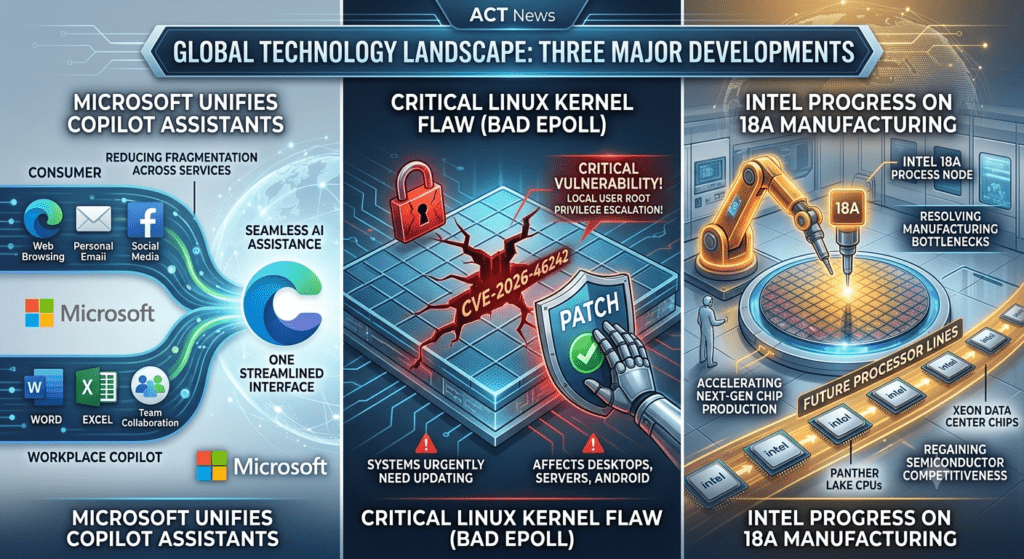
At the same time, broader technology trends continue to reflect a convergence of security challenges and rapid hardware and software innovation. The ongoing expansion of AI platforms by companies such as Microsoft, combined with advances in semiconductor manufacturing led by Intel, is reshaping how digital systems are built, deployed, and secured.
Analysts emphasize that the simultaneous rise of sophisticated cyberattacks and powerful AI tools creates a dual pressure on the technology ecosystem: innovation accelerates capabilities, while security threats evolve in parallel. This dynamic is forcing companies and governments to invest heavily in both offensive and defensive cyber capabilities.
Taken together, the PolinRider campaign, new generative AI tools, and ongoing hardware breakthroughs illustrate a technology landscape defined by rapid expansion and increasing complexity. As digital systems become more interconnected, the consequences of vulnerabilities and innovations alike continue to scale globally.
Sources: cybersecurity research reports, developer platform disclosures, industry analysis
What do you think is the bigger risk right now—AI-driven innovation outpacing security, or supply-chain cyberattacks like this one? Follow ACT News and share your opinion.
Stay Connected
Follow ACT News for real-time updates, breaking stories, and in-depth coverage from around the world.
Never Miss a Story
Join our WhatsApp Channel and get breaking news straight to your phone.
Join WhatsApp Channel →