ACT News | International Analysis
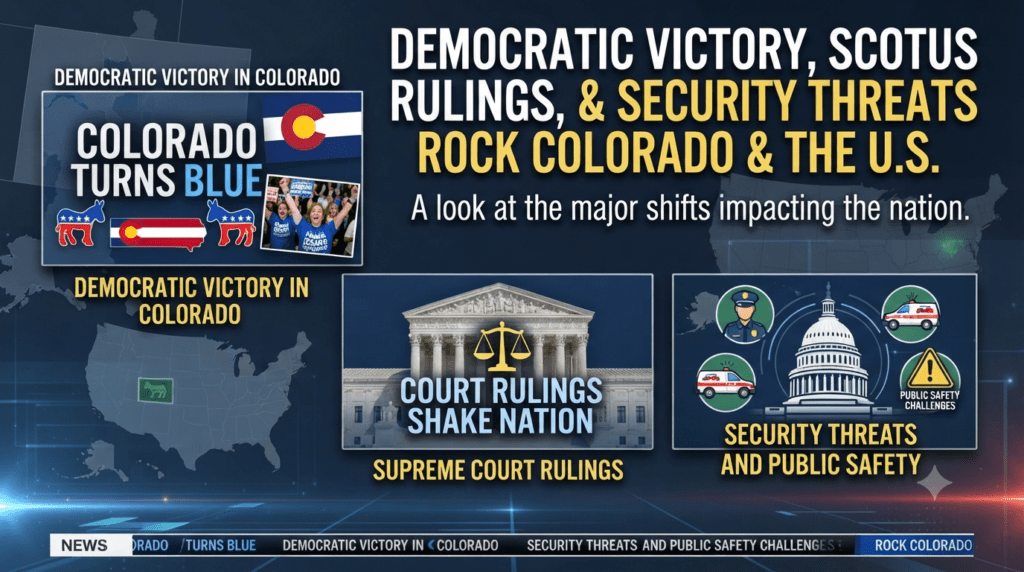
The United States is experiencing a period of significant political and institutional change as major court decisions, congressional negotiations, housing reforms, and primary elections reshape the national landscape. Recent developments have intensified debate over constitutional rights, economic policy, and the balance of power in Washington. According to reports from major American media outlets, official government statements, and ACT News analysis, these events are expected to influence both the U.S. economy and the political climate leading into the next election cycle.
Supreme Court Preserves Birthright Citizenship
The U.S. Supreme Court has reaffirmed the constitutional principle of birthright citizenship, rejecting efforts to end the automatic granting of citizenship to children born on American soil.
The ruling represents a major setback for proposals supported by President Donald Trump and preserves a legal framework that has existed for more than a century under the Fourteenth Amendment.
Economic analysts estimate that maintaining the current citizenship system supports long-term labor market stability and consumer growth, with studies suggesting that immigrant participation contributes significantly to an economy valued at more than $7.7 trillion across multiple sectors.
According to ACT News, the decision extends beyond constitutional law, providing continued predictability for businesses, financial markets, and long-term demographic planning.
Trump Calls on Congress to End Automatic Citizenship
Following the ruling, President Trump urged Congress to pursue legislation that would eliminate automatic birthright citizenship despite the Court’s decision.
The administration argues that immigration policy requires legislative reform, while critics maintain that constitutional protections cannot be altered through ordinary legislation.
ACT News believes the renewed political confrontation will likely become one of the defining issues of upcoming congressional debates and the 2026 election campaign.
Senate Advances Housing Reform
The U.S. Senate has approved legislation designed to reduce housing costs by limiting large institutional investment firms from acquiring significant numbers of residential properties.
Supporters argue that restricting purchases by major Wall Street investment funds could improve affordability for first-time homebuyers and reduce excessive price inflation in local housing markets.
If fully implemented, the measure could increase opportunities for individual home ownership while reshaping segments of the American real estate market.
According to ACT News, improving housing accessibility may strengthen household financial stability and stimulate broader economic activity through increased residential investment.
Republican Dispute Freezes House Activity
Internal disagreements among House Republicans have forced congressional leaders to suspend scheduled legislative votes and begin recess earlier than planned.
The dispute highlights continuing divisions within the governing majority over legislative priorities, budget negotiations, and political strategy.
For financial markets, prolonged legislative uncertainty may delay policy decisions affecting taxation, infrastructure spending, and regulatory reforms.
ACT News notes that political gridlock often increases uncertainty for investors and businesses that depend on stable legislative planning.
Historic Primary Victory in Colorado
Colorado delivered one of the most closely watched political surprises of the election season as Melat Kiros defeated a long-serving Democratic incumbent during the party’s primary election.
The result reflects changing voter preferences and demonstrates growing support for a new generation of political leadership in several competitive states.
Political analysts suggest that the outcome could encourage similar challenges in future primaries across the country.
According to ACT News, the Colorado race illustrates how internal party dynamics are evolving ahead of the general election and may reshape campaign strategies nationwide.
Economic Impact
Recent institutional and political developments carry important economic implications.
The Supreme Court’s decision provides greater legal certainty for employers, investors, and long-term workforce planning. Housing reform could ease pressure on property prices while supporting consumer confidence. Meanwhile, congressional divisions continue to create uncertainty regarding fiscal policy, federal spending, and future investment decisions.
For ACT News, the combination of constitutional stability and political volatility creates a complex environment in which economic confidence will depend heavily on the ability of policymakers to reach consensus on key national priorities.
ACT News Analysis
The United States enters a new phase where constitutional decisions, economic reforms, and political competition increasingly intersect. The preservation of birthright citizenship reinforces institutional continuity, while debates over immigration, housing affordability, and congressional leadership reveal a country actively redefining its political priorities.
According to ACT News, the coming months will be critical not only for the 2026 electoral landscape but also for the broader economic outlook. How Washington manages these challenges will influence investment confidence, labor markets, and America’s long-term competitiveness on the global stage.
This article was produced by ACT News based on information from major U.S. media organizations, official government statements, and independent editorial analysis by the ACT News newsroom.
Stay Connected
Follow ACT News for real-time updates, breaking stories, and in-depth coverage from around the world.
Never Miss a Story
Join our WhatsApp Channel and get breaking news straight to your phone.
Join WhatsApp Channel →