BEIRUT — Lebanon has renewed its commitment to strengthening relations with the Gulf Cooperation Council (GCC), as President Joseph Aoun welcomed the bloc’s latest declaration of support and emphasized that closer regional cooperation remains a central pillar of Beirut’s political, economic, and security strategy.

The statement comes at a critical moment for Lebanon, which continues to navigate economic hardship, institutional reform, regional security challenges, and ongoing diplomatic efforts aimed at reinforcing state authority across its territory.
GCC Reaffirms Support for Lebanon
President Aoun praised the GCC Secretariat for expressing solidarity with Lebanon and its people during a period marked by significant internal and regional pressures. According to the Lebanese presidency, the declaration reflects the longstanding historical, political, and cultural ties that have connected Lebanon with the Gulf states for decades.
The president said the Gulf position demonstrates continued confidence in Lebanon’s future and highlights the importance of preserving the country’s sovereignty, territorial integrity, and national stability.
He stressed that the relationship between Lebanon and the GCC extends beyond diplomacy, encompassing economic cooperation, humanitarian assistance, investment, education, and cultural exchange.
Commitment to State Sovereignty
A central element of the GCC declaration focused on reinforcing Lebanon’s state institutions.
President Aoun welcomed the bloc’s support for the principle that all weapons within Lebanon should remain under the exclusive authority of legitimate state institutions, in accordance with the Lebanese Constitution and relevant international agreements.
He also referenced the importance of implementing international commitments, including United Nations Security Council Resolution 1701, which has served for years as the framework governing security arrangements along Lebanon’s southern border.
According to Aoun, restoring full state authority across Lebanese territory remains essential for ensuring long-term stability, protecting citizens, and strengthening national institutions.
Reform Agenda Remains a Priority
Lebanon’s leadership reiterated that political and economic reforms remain among the government’s highest priorities.
President Aoun thanked Gulf partners for backing the country’s reform agenda, noting that rebuilding public confidence requires stronger institutions, greater transparency, improved governance, and sustainable economic policies.
Officials believe successful reforms could encourage renewed foreign investment, improve financial stability, and create conditions for long-term economic recovery after years of financial turmoil.
The government also hopes continued international cooperation will help accelerate modernization across several sectors, including infrastructure, public administration, healthcare, and education.
Humanitarian and Development Assistance
The Lebanese president expressed appreciation for the willingness of GCC countries to continue providing humanitarian and development support.
Such assistance, he said, plays a significant role in easing economic pressures facing millions of Lebanese families while supporting reconstruction projects and essential public services.
International aid has become increasingly important as Lebanon continues addressing challenges linked to inflation, unemployment, infrastructure deterioration, and reduced public spending.
Officials believe development partnerships with Gulf countries can contribute to improving living conditions while creating new opportunities for economic growth.
Strengthening Arab Partnerships
President Aoun reaffirmed Lebanon’s intention to maintain its strongest possible relationships with Arab nations, particularly members of the Gulf Cooperation Council.
He emphasized that expanding cooperation across political, security, economic, cultural, and commercial sectors serves the interests of all parties and contributes to broader regional stability.
Lebanese officials have repeatedly stated that stronger ties with Gulf nations remain essential for restoring investor confidence and supporting future reconstruction efforts.
France and Italy Lead New Security Initiative
Alongside regional diplomacy, Lebanon also welcomed growing European engagement regarding future security arrangements.
President Aoun praised France and Italy for proposing the creation of a multinational coalition intended to succeed the current United Nations peacekeeping mission once its mandate expires later this year.
He described the initiative as a meaningful demonstration of continued international commitment to Lebanon’s sovereignty and security.
The proposal follows statements from French President Emmanuel Macron, who announced that Paris and Rome are working with European and international partners on a framework designed to strengthen Lebanon’s armed forces while helping preserve regional stability.
According to Macron, the objective would be to ensure Lebanon remains secure while preventing its territory from becoming a source of broader regional escalation.
Continuing Security Challenges
Despite ongoing diplomatic efforts, southern Lebanon continues to experience periodic military incidents.
Israeli military officials announced operations targeting Hezbollah members they said were operating near what Israel describes as its security zone.
According to Israeli authorities, seven Hezbollah operatives were killed during the latest strikes.
The operations occurred despite ongoing negotiations aimed at preserving ceasefire arrangements and reducing military tensions along the border.
Lebanese officials continue calling for full respect of national sovereignty while supporting diplomatic mechanisms intended to prevent further escalation.
Settlement Violence Draws International Attention
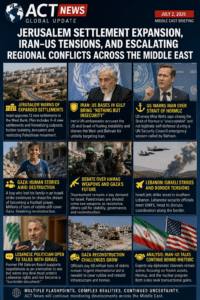
Separately, Israeli prosecutors filed charges against six Israeli settlers accused of participating in attacks against the Palestinian village of Deir Dibwan in the occupied West Bank.
Authorities allege the suspects coordinated violent acts that included arson, vandalism, attacks on homes, damage to a mosque, and assaults on local residents.
The indictments include terrorism-related charges alongside allegations of arson, sabotage, and violent rioting.
The case has attracted international attention amid continued concerns regarding rising settler violence across the West Bank.
Human rights organizations have repeatedly called for stronger accountability measures while international observers continue monitoring developments in the occupied territory.
Houthis Continue Regional Escalation
Meanwhile, Yemen’s Houthi movement continued to raise regional tensions through increasingly forceful political and military rhetoric.
Leader Abdul Malik al-Houthi declared his movement remains prepared to confront both Israel and the United States while reaffirming close alignment with Iran and the so-called “Axis of Resistance.”
He also warned against any potential Israeli presence in Somaliland and claimed his movement would respond using all available means if such a development occurred.
Analysts say the latest speech reflects the group’s continued strategy of combining regional messaging with domestic mobilization.
Humanitarian Crisis Deepens in Yemen
The military rhetoric comes as humanitarian organizations continue warning about worsening living conditions in Houthi-controlled areas.
International agencies estimate millions of Yemenis remain in urgent need of food assistance, healthcare, and humanitarian relief.
Recent assessments indicate severe food insecurity is expected to persist across several provinces, driven by ongoing conflict, economic disruption, limited employment opportunities, and declining purchasing power.
Aid organizations continue urging increased international assistance to prevent further deterioration of humanitarian conditions.
Regional Diplomacy Faces Critical Months
The Middle East enters another period of complex diplomatic negotiations involving Lebanon, Israel, Iran, Gulf countries, European governments, and international organizations.
For Lebanon, strengthening ties with Gulf partners represents not only an important diplomatic objective but also a key component of broader efforts to restore economic confidence, reinforce national institutions, and secure long-term stability.
While security challenges remain unresolved, Lebanese officials continue expressing optimism that sustained international cooperation, combined with domestic reforms and stronger regional partnerships, can help the country move toward greater political stability and economic recovery.
As negotiations continue across multiple fronts, Lebanon’s leadership appears determined to balance regional diplomacy, institutional reform, and international cooperation in pursuit of a more secure and prosperous future.
Stay Connected
Follow ACT News for real-time updates, breaking stories, and in-depth coverage from around the world.
Never Miss a Story
Join our WhatsApp Channel and get breaking news straight to your phone.
Join WhatsApp Channel →