Syria signals diplomacy as U.S. pressures for intervention; Gaza, Lebanon, Iran and Israel tensions escalate
By ACT News International Desk
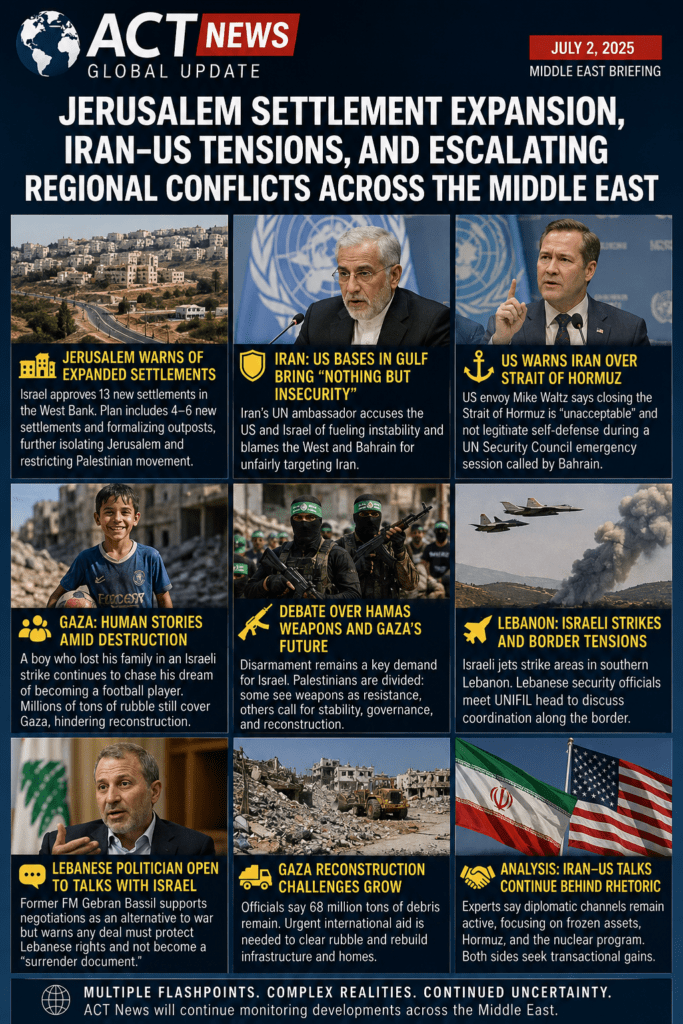
Diplomatic and military tensions continue to rise across the Middle East as competing signals emerge from Washington, Damascus, Tehran, Beirut, and Jerusalem. While U.S. officials push for a more interventionist approach in regional security dynamics, Syria appears to be leaning toward diplomatic engagement following high-level talks in Beirut.
Syria rejects intervention pressure, opts for diplomacy after Lebanon visit
The Syrian Foreign Minister’s recent visit to Lebanon has highlighted a shift in tone from Damascus, which appears to be resisting external calls for military escalation.
According to regional reporting, U.S. political figures have expressed interest in a broader regional role for Syria, particularly in relation to Hezbollah’s disarmament. However, Syrian officials have rejected such proposals, instead signaling a preference for diplomatic coordination with Lebanese authorities.
During meetings in Beirut, Syrian Foreign Minister Asaad al-Shaibani met Lebanese Speaker Nabih Berri, a key political figure associated with Hezbollah-aligned blocs. The move is being interpreted by analysts as an effort to maintain political dialogue rather than escalate regional confrontation.
The situation reflects what ACT News identifies as a broader strategic divergence:
- Washington exploring pressure-based regional realignment
- Damascus emphasizing political engagement with Lebanese institutions
- Beirut balancing internal divisions amid external expectations
Gaza war aftermath deepens humanitarian and political divisions
In Gaza, humanitarian conditions continue to deteriorate as debates intensify over post-war governance and armed resistance.
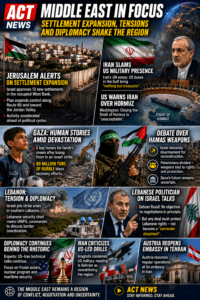
Reports from Gaza indicate that the death toll has surpassed 73,000 Palestinians, with hundreds of thousands injured since the escalation of the conflict. Civil infrastructure remains heavily damaged, with municipal authorities warning that debris removal alone will take years due to the scale of destruction.
At the same time, discussions over the role of armed groups such as Hamas remain deeply divisive. Some Palestinians argue that disarmament could be tied to governance reforms and stability, while others insist that armed resistance remains necessary until a final political settlement is reached.
ACT News notes that this debate is increasingly shaping diplomatic negotiations involving regional and international actors.
Lebanon: Israeli strikes and political tension over negotiations
The situation in southern Lebanon remains volatile, with continued Israeli air and drone activity reported in multiple areas, including Nabatieh al-Fawqa and surrounding districts.
Lebanese political discourse is also shifting. Former Foreign Minister Gebran Bassil stated that dialogue with Israel should not be ruled out, provided it leads to sovereignty guarantees and avoids what he described as a “framework of surrender.” His comments reflect growing internal debate within Lebanon over whether negotiations could reduce escalation or deepen political fractures.
Meanwhile, Israeli military activity in southern Lebanon continues alongside cross-border tensions involving Hezbollah positions.
Iran–U.S. tensions intensify over Gulf security and Hormuz Strait
Iranian and U.S. officials exchanged strong statements during an emergency UN Security Council session focused on maritime security in the Gulf region.
Iran’s representative argued that U.S. military bases in the region “create insecurity rather than stability,” while Washington warned Tehran against any attempt to restrict navigation in the Strait of Hormuz, calling such actions unacceptable under international law.
Iranian officials also reiterated that any external military pressure would be met with what they described as a “decisive response,” further escalating diplomatic friction.
Israel: settlement expansion warnings and domestic protests
In the West Bank, the Jerusalem Governorate warned that Israel’s approval of 13 new settlements in the occupied West Bank could significantly expand territorial fragmentation and restrict Palestinian movement, particularly in areas surrounding East Jerusalem and the Jordan Valley.
At the same time, domestic unrest continues inside Israel. Mass protests were held marking 1,000 days since the October 7 attacks, with demonstrators calling for a national inquiry and criticizing government handling of the ongoing conflict.
Regional overview: rising fragmentation, limited diplomatic convergence
Across multiple fronts, ACT News observes a pattern of simultaneous escalation and cautious diplomacy:
- Syria: rejecting military escalation, leaning toward structured diplomacy
- Lebanon: divided between negotiation openness and resistance posture
- Gaza: humanitarian collapse intensifies political deadlock
- Iran–U.S.: strategic confrontation over maritime security
- Israel: internal political pressure amid external military operations
Despite ongoing violence and rhetoric, no unified regional framework for de-escalation has yet emerged.
ACT News Analysis
The current phase of the regional crisis is defined less by single-front warfare and more by interconnected pressure points: maritime security, border conflicts, internal political legitimacy, and competing diplomatic initiatives.
While Washington continues to explore containment strategies involving multiple regional actors, countries like Syria and Lebanon are signaling that direct military expansion may not align with their current strategic interests.
At the same time, the humanitarian situation in Gaza and continued instability in southern Lebanon ensure that diplomatic efforts remain under constant strain.
ACT News will continue monitoring developments across the region.
Stay Connected
Follow ACT News for real-time updates, breaking stories, and in-depth coverage from around the world.
Never Miss a Story
Join our WhatsApp Channel and get breaking news straight to your phone.
Join WhatsApp Channel →