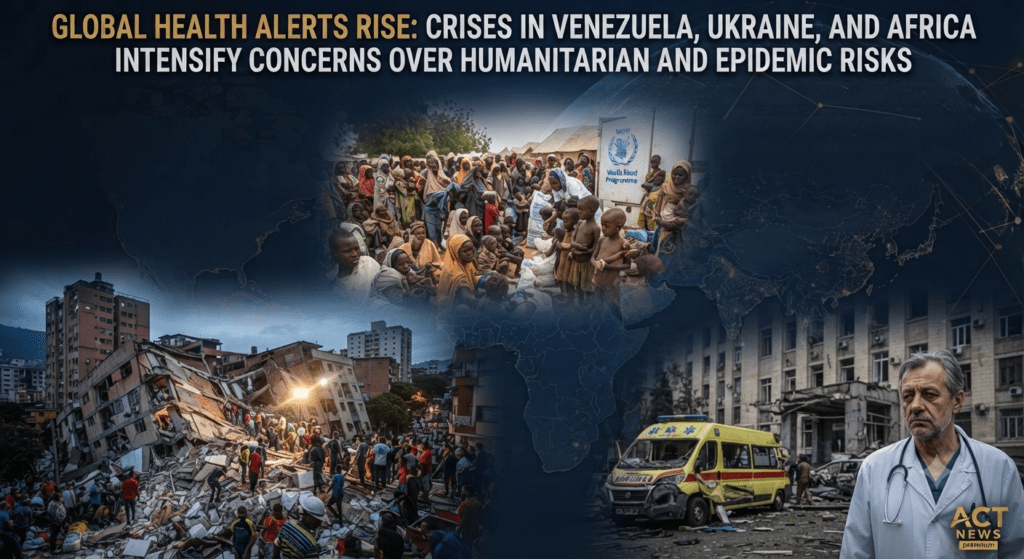
A series of simultaneous humanitarian and public health developments across different regions is drawing global attention, with medical systems, food security, and emergency response networks under growing pressure. The situation reflects a broader pattern of overlapping crises where natural disasters, conflict environments, and infrastructure limitations are combining to strain vulnerable populations.
Venezuela: healthcare system under extreme pressure after seismic events
Recent seismic activity in Venezuela has resulted in large-scale human impact, with reports indicating more than 2,200 fatalities and approximately 11,000 injured. Emergency services continue to operate in difficult conditions, particularly in temporary shelters where overcrowding has raised concerns about the potential spread of infectious diseases.
Health specialists and humanitarian observers warn that the combination of displacement, limited sanitation, and strained medical infrastructure may increase the likelihood of secondary outbreaks in the coming weeks. Relief coordination efforts are ongoing, but logistical challenges remain significant, especially in remote or heavily affected areas.
From an analytical perspective, this situation highlights a recurring global issue: disaster response capacity often weakens precisely when it is needed most, particularly in regions where healthcare systems were already under stress prior to the event.
Ukraine: medical facilities affected amid ongoing emergency conditions
In Ukraine, emergency medical infrastructure has been impacted by damage to ambulances and a hospital station following recent incidents in Kyiv. Reports indicate that medical personnel were among those affected while responding to ongoing emergency situations in urban areas.
Although operations continue, the disruption of ambulance services raises concerns about response times and access to urgent care. Medical teams have adapted by redistributing resources and prioritizing critical cases, but the strain on emergency systems remains evident.
Observers note that repeated pressure on healthcare infrastructure in active emergency environments often leads to long-term consequences, including staff fatigue, equipment shortages, and reduced operational capacity.
Nigeria: food insecurity reaches critical levels in northern regions
In northern Nigeria, food insecurity continues to worsen, with estimates suggesting that around 17 million people are at risk of severe malnutrition. The World Food Programme has raised concerns about the scale of need, particularly in areas affected by instability, climate challenges, and disrupted agricultural production.
Humanitarian organizations emphasize that sustained access to food assistance is becoming increasingly difficult due to funding gaps and logistical constraints. Without continued support, the situation may deepen, especially for children and displaced populations.
From a broader perspective, this crisis reflects the growing intersection between climate stress, economic pressure, and regional instability in shaping modern food security risks.
Public health risks: emerging disease concerns across multiple regions
In the United States, health authorities have reported growing concern over cases linked to Vibrio bacteria, sometimes referred to in public reports as “flesh-eating” infections. Cases have been identified in coastal regions including New York, Florida, and Mississippi. While still relatively rare, the infections can become serious if not treated early, particularly in warm coastal waters where bacteria thrive.
Experts emphasize that environmental factors such as rising sea temperatures may contribute to the expansion of such bacteria into new areas, increasing the importance of public awareness and preventive measures.
Separately, in Venezuela, environmental and infrastructure conditions are also contributing to increased risk of vector-borne diseases such as dengue and malaria. High temperatures combined with limited sanitation systems create favorable conditions for mosquito-borne transmission, particularly in overcrowded shelter environments.
Overall analysis: converging risks across health, environment, and infrastructure
Taken together, these developments illustrate a growing pattern of interconnected global risk factors. Natural disasters, healthcare strain, food insecurity, and infectious disease threats are increasingly overlapping rather than occurring in isolation.
While each situation differs in origin and scale, a common theme emerges: systems under pressure tend to face compounding vulnerabilities when multiple stressors occur at the same time. This raises broader questions about preparedness, international coordination, and long-term resilience planning.
From a neutral analytical standpoint, the current landscape suggests that humanitarian and public health systems are being tested not only by individual crises, but by their simultaneous occurrence across different regions.
If you want, I can convert this into your ACT News premium format, with headline + subhead + SEO tags + image prompt for each section.
Stay Connected
Follow ACT News for real-time updates, breaking stories, and in-depth coverage from around the world.
Never Miss a Story
Join our WhatsApp Channel and get breaking news straight to your phone.
Join WhatsApp Channel →