Recent developments across family health, chronic disease management, and global humanitarian conditions highlight growing pressure on healthcare systems and social support structures in multiple regions. From infant health concerns and caregiver overload to long-term mental health impacts and international relief efforts, the situation reflects a widening intersection between medical, social, and geopolitical challenges.
By ACT News
Infant and family health concerns raise safety and accountability questions
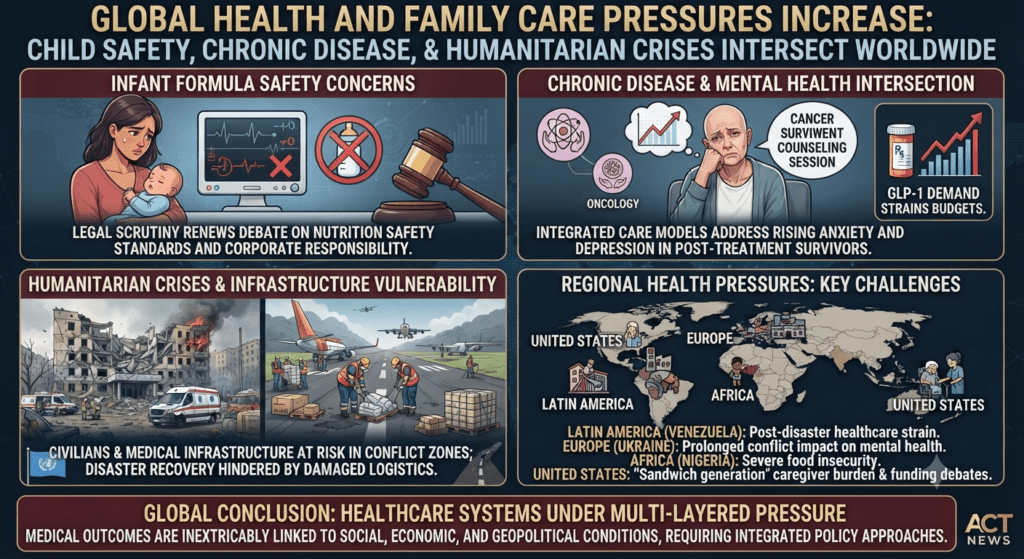
A reported case involving the death of an infant linked to baby formula has led to legal and public scrutiny, with the mother alleging negligence related to cases of necrotizing enterocolitis. While investigations continue, the case has renewed broader discussions about infant nutrition safety standards, regulatory oversight, and corporate responsibility in sensitive medical products.
Health experts emphasize that although such cases remain rare, they often drive renewed evaluation of manufacturing processes and clinical risk communication, especially for vulnerable newborn populations.
At the same time, demographic and social shifts in the United States are intensifying family caregiving pressures. The so-called “sandwich generation”—adults simultaneously caring for children and aging parents—now represents millions of households facing sustained emotional, financial, and physical strain. Analysts note that this dual-care burden is becoming a defining feature of aging societies, with long-term implications for workforce participation and mental health.
Chronic disease survivors face growing mental health challenges
A recent analysis highlights that many cancer survivors experience increased rates of depression and anxiety following treatment. While medical survival rates continue to improve, researchers note that psychological recovery often lags behind physical remission.
Specialists stress that post-treatment care is increasingly shifting toward integrated models that include mental health support alongside oncology follow-up. This reflects a broader trend in modern healthcare: survival is no longer the only metric, as quality of life after treatment becomes a central concern.
In parallel, demand for GLP-1 medications used in the treatment of obesity and diabetes continues to grow, placing pressure on insurance systems and healthcare budgets. Patients are increasingly seeking broader coverage access, while insurers and policymakers debate long-term affordability and eligibility criteria.
The situation illustrates how pharmaceutical innovation can rapidly reshape both clinical practice and healthcare financing structures.
Global humanitarian and public health protection concerns
The United Nations has reiterated warnings about the protection of civilians and medical infrastructure in conflict zones, emphasizing that hospitals and ambulances must remain safeguarded under international humanitarian principles. These statements come amid ongoing global concerns about the vulnerability of healthcare systems in unstable regions.
In Venezuela, international assistance efforts continue, with U.S.-supported operations reportedly involving the repair of airport infrastructure to facilitate humanitarian supply delivery following seismic events. Relief logistics remain critical as emergency services attempt to respond to widespread need.
Observers note that infrastructure recovery is often as important as direct aid, as damaged transport and logistics systems can significantly delay medical and food assistance.
Regional overview: interconnected health pressures across continents
Across regions, healthcare systems and family structures are facing different but interconnected forms of stress:
In Latin America, Venezuela is confronting severe post-disaster healthcare and sanitation challenges following major seismic events, with risks of secondary health crises in overcrowded shelters.
In Europe, prolonged conflict conditions in Ukraine continue to affect hospitals and contribute to rising mental health needs among civilians and healthcare workers.
In Africa, Nigeria is experiencing a severe food insecurity crisis, placing millions at risk of malnutrition and increasing vulnerability to disease.
In the United States, public health concerns include bacterial infections in coastal regions, debates over healthcare funding, immigration-linked workforce shortages, and growing pressure from chronic disease management and medication access.
Global conclusion: healthcare systems under multi-layered pressure
Taken together, these developments suggest that modern healthcare challenges are increasingly multi-dimensional. Medical outcomes are now closely linked to social caregiving structures, pharmaceutical access, mental health support, disaster response capacity, and geopolitical stability.
While each issue varies in scale and origin, a shared pattern emerges: healthcare systems are being asked to manage not only illness, but also the broader social and environmental conditions that influence health outcomes.
This convergence highlights the growing need for integrated policy approaches that connect healthcare delivery, family support systems, and international humanitarian coordination.
Stay Connected
Follow ACT News for real-time updates, breaking stories, and in-depth coverage from around the world.
Never Miss a Story
Join our WhatsApp Channel and get breaking news straight to your phone.
Join WhatsApp Channel →