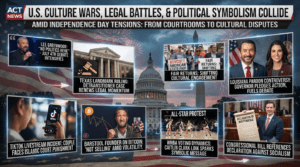
Veterans, political tension, security warnings and historical reflections shape a highly polarized Fourth of July narrative
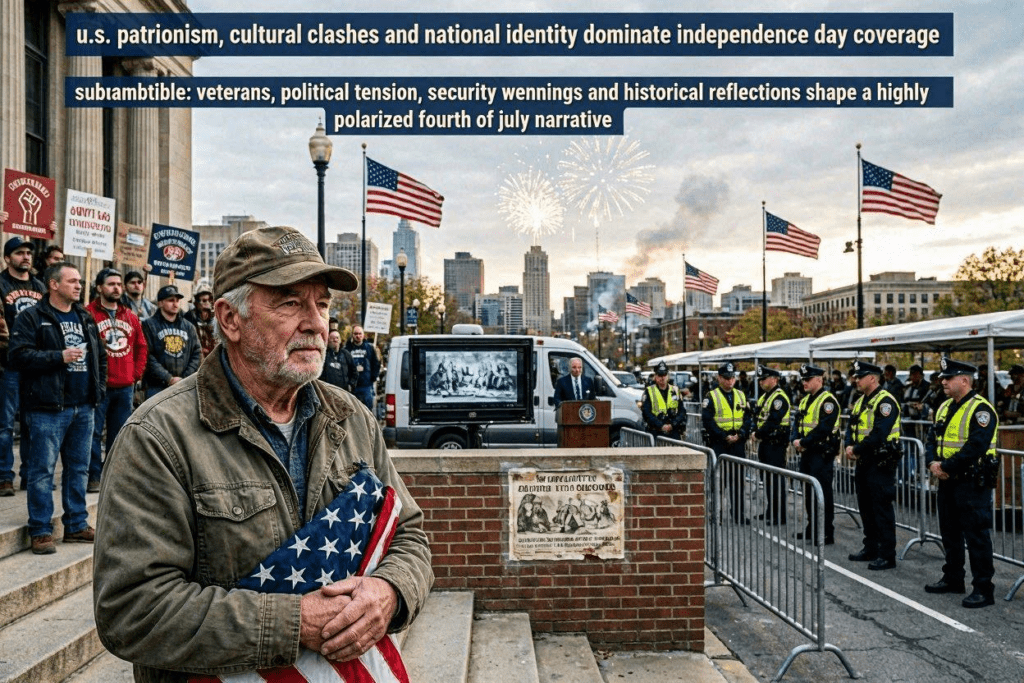
ACT News — Across the United States, Independence Day coverage has been marked by a strong wave of patriotic messaging, political confrontation and cultural debate, with public figures, veterans and commentators emphasizing themes tied to national identity, military sacrifice and America’s upcoming 250th anniversary.
Former U.S. Representative Doug Collins shared a patriotic message highlighting the sacrifices of veterans and military families, framing freedom as a product of long-term national service and collective responsibility. The message has been widely circulated in discussions surrounding July 4th commemorations.
Former White House chef Will Artley reflected on presidential preferences and traditions ahead of America’s 250th anniversary, offering insight into symbolic customs linked to past administrations and national celebrations. The remarks contribute to a broader cultural focus on how leadership traditions shape national identity.
Vice President JD Vance also emphasized the role of the military in American history, celebrating 250 years of national development and reinforcing narratives centered on service, defense and continuity of state institutions.
Former political strategist Reince Priebus commented on leadership challenges, arguing that current issues are rooted more in governance structure than communication strategy, adding to ongoing debates about institutional effectiveness in the U.S. political system.
Patriotic initiatives were also highlighted through symbolic actions, including individuals carrying the American flag across the country to honor the nation’s 250th anniversary, reflecting grassroots expressions of national pride during the holiday period.
In Minnesota, a group of young boys reportedly raised $60,000 for a veterans’ nonprofit through a lemonade stand, an example widely shared as a symbol of civic engagement and community-driven support for military families.
Country artist Chris Janson discussed the importance of passing patriotic values to his children, emphasizing cultural continuity and national identity as central themes in American family life.
A former Navy SEAL involved in the operation that killed Osama bin Laden also reflected on the 250th anniversary of the United States, connecting historical military operations to present-day reflections on national security and global influence.
Meanwhile, millions of Americans traveled during the July 4th holiday period, marking one of the busiest domestic mobility events of the year, according to holiday travel estimates.
Media coverage also highlighted regional celebrations such as Annapolis, Maryland, where traditional patriotic displays and public events were featured as part of nationwide commemorations.
Alongside patriotic narratives, more controversial and global issues also surfaced in coverage. A reported case involving a young couple punished under an Islamic court system for a TikTok-related incident continued to draw international attention, raising concerns over digital expression and legal enforcement across borders.
Lee Greenwood responded to criticism from artists who distanced themselves from political messaging during July 4th celebrations, defending the idea of keeping politics present in cultural expression rather than excluding it entirely, further intensifying debates over the role of politics in entertainment.
Political controversy also emerged after comments from a Democratic congresswoman regarding testimony linked to Hegseth sparked backlash, highlighting increasing polarization in congressional discourse.
Security concerns were raised after warnings that institutional weakness could contribute to broader instability in the United States, including extreme rhetoric suggesting civil conflict risk, reflecting heightened tensions in political commentary spaces.
Public health alerts also circulated after reports of rabid squirrels appearing in multiple U.S. neighborhoods, while separate incidents involving a child’s death from rabies exposure underscored ongoing zoonotic disease risks.
In sports, refereeing controversy in a U.S. match involving VAR decisions and a red card for Folarin Balogun sparked criticism from former officials, adding to ongoing debates over technology and officiating standards in football.
Legislative symbolism also appeared in Congress-related discussions, where Representative Van Epps introduced messaging tied to the Declaration of Independence in response to ideological shifts, reinforcing the use of historical references in modern political disputes.
Additional content included Independence Day safety warnings and commentary on potential overlooked risks during holiday celebrations, as authorities emphasized preparedness and public awareness.
ACT News observes that this Independence Day period reflects a deeply divided American information environment, where patriotism, political conflict, cultural identity and security concerns converge into a single, highly amplified media cycle.
Rather than isolated events, the coverage demonstrates how national holidays now function as platforms for political messaging, cultural debate and institutional reflection in real time.
ACT News will continue monitoring how these narratives evolve through the 250th anniversary cycle and their impact on American political culture and public discourse.
Stay Connected
Follow ACT News for real-time updates, breaking stories, and in-depth coverage from around the world.
Never Miss a Story
Join our WhatsApp Channel and get breaking news straight to your phone.
Join WhatsApp Channel →