By ACT News | Based on reports from multiple U.S. media outlets and official court documents
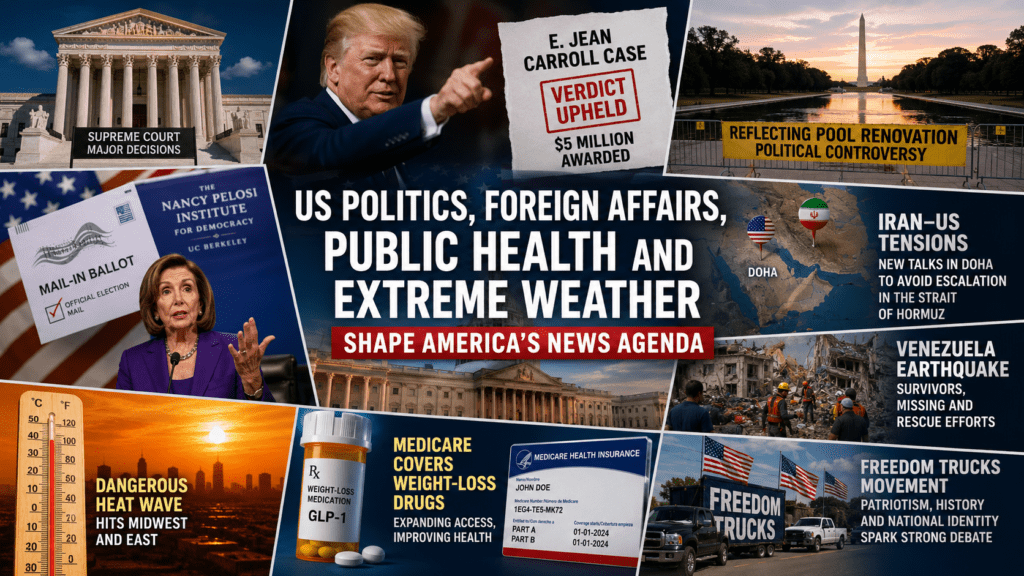
A series of major decisions and political developments in the United States has placed the Supreme Court at the center of national attention, influencing presidential authority, election administration, civil litigation, and the future of democratic leadership.
Taken together, these events highlight how judicial rulings continue to shape the country’s political landscape ahead of future national elections.
Supreme Court Broadens Presidential Authority Over Independent Agencies
One of the most significant rulings expands the authority of President Donald Trump over portions of the federal government.
The Court determined that the president has broader constitutional power to remove officials serving on certain independent federal agencies, including members of the Federal Trade Commission (FTC). The decision is expected to strengthen executive influence over agencies that have traditionally operated with greater institutional independence.
Supporters argue that the ruling reinforces presidential accountability by allowing elected leaders to exercise greater control over executive branch officials. Critics, however, warn that reducing the independence of regulatory agencies could increase political influence over decisions involving consumer protection, competition policy, and federal oversight.
Legal experts believe the decision could influence future administrations regardless of political party, potentially redefining the balance of power between the White House and independent regulatory bodies.
Mail-In Ballot Decision Leaves Election Rules Largely in State Hands
In another closely watched case, the Supreme Court declined to block state policies allowing certain mailed ballots to be counted after Election Day, provided they were sent before the legal deadline established under state law.
The ruling effectively rejected a legal challenge supported by the Republican Party, leaving existing election procedures intact in several states that accept ballots arriving after Election Day under specific conditions.
Election officials say the decision provides continuity for voters who rely on absentee and mail voting, particularly military personnel, overseas citizens, and individuals living in remote communities.
Supporters view the outcome as preserving voter access, while critics argue that counting ballots after Election Day may continue to generate political debate regarding election administration and public confidence.
Supreme Court Leaves E. Jean Carroll Judgment Intact
The Court also declined to hear President Trump’s appeal in the civil case brought by writer E. Jean Carroll.
As a result, the previous judgment awarding Carroll approximately $5 million in damages remains in effect.
The underlying civil trial concluded that Trump was liable for sexual abuse and defamation under the applicable legal standards. Trump has consistently denied the allegations and has repeatedly criticized the court proceedings, maintaining that the claims are unfounded.
By declining to review the appeal, the Supreme Court leaves the lower court’s decision unchanged, bringing another chapter of the long-running legal dispute to a close unless additional legal avenues emerge.
Nancy Pelosi Launches New Democracy Institute
Outside the courtroom, former House Speaker Nancy Pelosi announced the creation of a new democracy institute at the University of California, Berkeley.
The initiative aims to educate and prepare future generations of public servants, policy specialists, civic leaders, and researchers interested in democratic institutions, governance, and public service.
According to organizers, the institute will focus on leadership development, constitutional government, civic engagement, and the preservation of democratic values through academic programs, public discussions, and research initiatives.
Pelosi described the project as an investment in future leadership at a time when democratic institutions face growing challenges both within the United States and internationally.
A Defining Moment for American Institutions
Together, these developments illustrate the growing influence of the Supreme Court on nearly every aspect of American public life.
From expanding presidential authority over federal agencies and shaping election procedures to resolving high-profile civil litigation and coinciding with new civic education initiatives, the decisions underscore the judiciary’s central role in interpreting the Constitution and influencing the nation’s political future.
Observers expect these rulings to remain influential throughout the coming election cycle, as debates over executive power, voting rights, institutional independence, and democratic governance continue to dominate the national conversation.
ACT News will continue following these developments through official court decisions, government statements, and multiple independent sources to provide balanced international coverage.
Follow ACT News for more exclusive coverage, global affairs, politics, and breaking international news.
Stay Connected
Follow ACT News for real-time updates, breaking stories, and in-depth coverage from around the world.
Never Miss a Story
Join our WhatsApp Channel and get breaking news straight to your phone.
Join WhatsApp Channel →