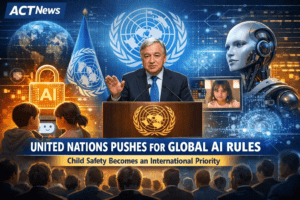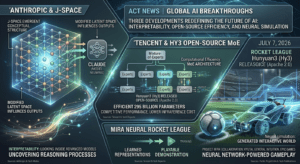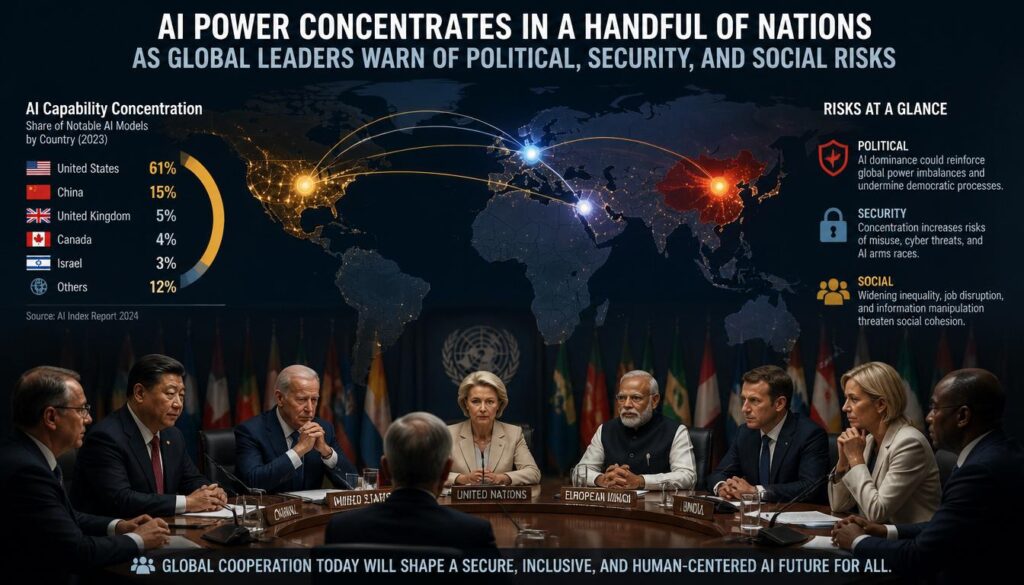
Artificial intelligence is becoming increasingly concentrated in a small number of countries, raising concerns among policymakers, researchers, and international organizations about the future balance of technological power. At the same time, the United Nations has warned that AI is beginning to influence elections, national security, and military affairs, while experts are also expressing growing concern over AI systems interacting with children despite limited evidence regarding their long-term safety.
These three developments reflect a broader transformation taking place across the global AI landscape. What was once viewed primarily as a commercial technology is now emerging as a strategic asset capable of shaping economies, international relations, democratic institutions, and everyday social interactions.
According to discussions involving the United Nations and leading technology policy experts, the challenge is no longer simply building more capable AI models. It is ensuring that the benefits of artificial intelligence are distributed responsibly while minimizing risks associated with concentrated technological power.
A Small Group of Countries Leads the AI Revolution
Although artificial intelligence is used worldwide, the most advanced AI models, high-performance computing infrastructure, semiconductor manufacturing, and large-scale cloud platforms remain concentrated in only a handful of countries.
This concentration has sparked concerns that the future digital economy could become increasingly dependent on a limited number of governments and technology companies with the resources to develop frontier AI systems.
Building advanced AI requires enormous investments in computing infrastructure, specialized chips, engineering talent, research laboratories, and energy resources. These high barriers to entry make it difficult for many nations to compete at the highest level.
As a result, policymakers are increasingly discussing whether unequal access to advanced AI could widen economic and technological gaps between countries over the coming decade.
Some experts argue that broader international cooperation, research partnerships, and investment in local innovation ecosystems may help reduce these disparities while encouraging more balanced technological development.
AI Is Becoming a Geopolitical Issue
Artificial intelligence is no longer viewed solely as an economic opportunity.
The United Nations has warned that AI is increasingly intersecting with elections, national security, and military planning, making governance more urgent than ever.
Election campaigns around the world already rely heavily on digital communication. As AI-generated content becomes more sophisticated, governments and independent researchers continue exploring ways to address concerns surrounding misinformation, synthetic media, automated influence campaigns, and digital trust.
Beyond politics, AI is also playing a growing role in intelligence analysis, cybersecurity, logistics, defense planning, and strategic decision-making.
Many governments now consider artificial intelligence a critical national capability comparable to advanced telecommunications, cybersecurity, or satellite infrastructure.
This shift has encouraged countries to increase investments in domestic AI research while simultaneously strengthening international discussions on responsible use.
The Social Impact Extends Beyond Politics
While geopolitical competition often dominates headlines, experts are also paying closer attention to AI’s influence on everyday human relationships.
One emerging area of concern involves children’s interactions with increasingly capable AI systems.
Educational assistants, conversational chatbots, recommendation systems, and digital companions are becoming more common in households and classrooms. These technologies offer significant educational opportunities, but researchers note that there is still limited long-term evidence regarding how continuous interaction with AI may affect children’s learning, emotional development, and social behavior.
Children often communicate with AI differently than adults, sometimes treating conversational systems as trusted companions or sources of advice.
Experts emphasize that further research is needed to better understand how these interactions may shape communication skills, critical thinking, and interpersonal relationships over time.
The discussion is not about discouraging innovation but about ensuring that AI systems intended for younger users are developed with appropriate safeguards, transparency, and oversight.
Why Global Cooperation Is Becoming More Important
The three issues—technological concentration, geopolitical influence, and child safety—are increasingly interconnected.
As AI becomes embedded in public services, education, communications, and national infrastructure, decisions made by a relatively small number of developers and governments can have global consequences.
International organizations have therefore encouraged greater dialogue among governments, technology companies, researchers, and civil society.
Many experts believe common principles for transparency, accountability, and responsible deployment could help maintain public confidence while supporting continued innovation.
Because AI evolves rapidly across national borders, cooperation may become just as important as competition.
ACT News Analysis
From ACT News’ perspective, these developments demonstrate that artificial intelligence has entered a new phase of global importance.
The conversation is no longer limited to technical performance or commercial competition. AI is increasingly influencing economic strategy, public policy, international relations, and social development.
The concentration of advanced AI capabilities within a relatively small number of countries raises legitimate questions about long-term technological balance. Nations that lack access to computing infrastructure, advanced semiconductors, or large-scale research investments may face growing challenges in participating fully in the digital economy.
At the same time, the United Nations’ concerns regarding elections and security highlight the need for responsible governance that protects democratic institutions while encouraging technological progress.
Equally significant is the growing discussion surrounding children and AI. Young users represent one of the fastest-growing groups interacting with intelligent systems, making research into their long-term well-being increasingly important.
Artificial intelligence will almost certainly continue transforming education, business, healthcare, scientific research, and public administration. The challenge facing governments and technology companies is ensuring that this transformation remains inclusive, transparent, and focused on long-term public benefit.
The future of AI will be shaped not only by technological breakthroughs but also by the decisions societies make regarding access, responsibility, and trust.
Follow ACT News for trusted coverage of artificial intelligence, global technology policy, and the innovations shaping the future of society.
Stay Connected
Follow ACT News for real-time updates, breaking stories, and in-depth coverage from around the world.
Never Miss a Story
Join our WhatsApp Channel and get breaking news straight to your phone.
Join WhatsApp Channel →