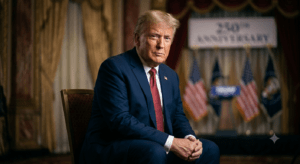
Recent developments reported across multiple international outlets highlight a wide-ranging mix of political tensions, economic indicators, social debates, environmental pressures, and security-related events. Taken together, these signals show how interconnected policy decisions, public sentiment, and global market behavior have become.
U.S. ECONOMY: EMPLOYMENT COOLING BUT STABLE LABOR CONDITIONS
Recent labor data in the United States shows employment growth slowing more than expected, while unemployment declines to a lower level. This combination often suggests a labor market that is adjusting rather than weakening sharply.
From a macroeconomic perspective, this type of divergence—slower job creation with stable or improving unemployment—can be linked to changes in labor force participation rather than immediate economic contraction. Financial markets tend to interpret this as a sign that monetary policy may shift toward a more cautious stance in upcoming decisions.
ACT News perspective: labor markets are entering a balancing phase where wage pressure, hiring demand, and workforce participation are adjusting simultaneously, making short-term forecasting more complex for investors and policymakers.
MONETARY POLICY AND GLOBAL FINANCIAL COORDINATION
Central banking discussions in international forums reflect ongoing efforts to align monetary strategies across major economies. Policymakers are increasingly focused on inflation stability, productivity challenges, and financial system resilience.
The presence of coordinated discussions among global financial leaders indicates that monetary policy is no longer purely domestic. Instead, it is influenced by shared global pressures such as supply chain normalization, technological disruption, and capital mobility.
ACT News analysis: central banking has become a synchronized global system where decisions in one region can quickly transmit financial effects worldwide.
GEOPOLITICAL PRESSURE AND ENERGY SECURITY
Recent developments involving strategic maritime regions and military positioning in sensitive energy corridors continue to influence global risk perception. Areas such as the Strait of Hormuz remain central to global energy logistics, and even perceived instability in these zones can affect oil pricing and shipping insurance costs.
Energy markets react strongly not only to physical disruptions but also to expectations of disruption, creating volatility in futures pricing and currency hedging strategies.
ACT News interpretation: geopolitical uncertainty is now fully embedded into energy market pricing models, making risk perception almost as influential as supply and demand fundamentals.
INSTITUTIONAL DECISIONS AND RELIGIOUS ORGANIZATIONAL CHANGES
Recent institutional actions involving religious leadership structures and internal disciplinary measures reflect broader patterns of fragmentation within long-established organizations.
While not directly tied to financial markets, these developments influence cultural cohesion, institutional trust, and long-term social stability—factors that indirectly affect investment confidence and regional economic predictability.
ACT News view: institutional trust is increasingly functioning as a background economic variable that shapes long-term investment environments.
SOCIAL POLICY AND PUBLIC DEBATE IN URBAN AREAS
Local debates around public events, funding structures, and social policy priorities reflect ongoing tension between civic traditions and evolving administrative frameworks.
These discussions often extend beyond symbolism, as funding decisions, donor participation, and public-private cooperation can directly affect local economic activity and event sustainability.
ACT News perspective: civic policy decisions are increasingly tied to financial participation, turning cultural events into economic coordination points.
TRANSPORTATION, SAFETY AND INFRASTRUCTURE MONITORING
Reports involving transport safety investigations and regulatory reviews highlight the importance of infrastructure oversight in maintaining public confidence in aviation and transportation systems.
Such investigations often lead to revisions in safety protocols, insurance adjustments, and operational compliance costs for transportation providers.
ACT News analysis: infrastructure reliability is a foundational economic input that influences both consumer confidence and logistics efficiency.
MARKET SENTIMENT AND POLITICAL RISK PRICING
Financial markets continue to react to political developments, including electoral dynamics and policy debates in major economies. Investor sentiment is increasingly shaped by expectations of regulatory direction rather than short-term economic data alone.
This creates a feedback loop where political uncertainty affects capital allocation, which in turn influences market volatility and credit conditions.
ACT News interpretation: political stability has become a core component of financial risk modeling across global markets.
CULTURAL EVENTS AND MEDIA-DRIVEN ECONOMIC CYCLES
High-visibility cultural discussions and media narratives continue to influence consumer engagement cycles. Entertainment-driven attention often translates into measurable impacts on advertising markets, streaming engagement, and brand exposure.
Even non-economic cultural events can produce short-term shifts in consumer attention allocation, which indirectly affects digital platform revenue performance.
ACT News note: attention economics now plays a measurable role in short-term market behavior.
GLOBAL SYSTEM VIEW: INTERCONNECTED PRESSURE POINTS
When combining economic indicators, geopolitical developments, institutional changes, infrastructure oversight, and cultural cycles, a broader structural pattern emerges.
Global systems are operating in a tightly connected environment where:
- Economic data influences monetary policy expectations
- Geopolitical risk shapes energy pricing
- Institutional decisions affect long-term trust
- Cultural cycles influence consumer markets
- Political uncertainty impacts financial flows
ACT News conclusion: the global environment is increasingly defined by interconnected signals rather than isolated events, requiring continuous multi-layer analysis to understand market and policy behavior accurately.
Stay Connected
Follow ACT News for real-time updates, breaking stories, and in-depth coverage from around the world.
Never Miss a Story
Join our WhatsApp Channel and get breaking news straight to your phone.
Join WhatsApp Channel →