Football stopped being only a competition played on the pitch a long time ago. The 2026 World Cup has demonstrated how major international events have become spaces where sporting interests, political influence and diplomatic strategies increasingly meet.
The elimination of the United States against Belgium, the political discussions surrounding President Donald Trump and NATO’s movements ahead of the summit in Ankara reveal a changing global environment where sports and geopolitics are becoming more closely connected.
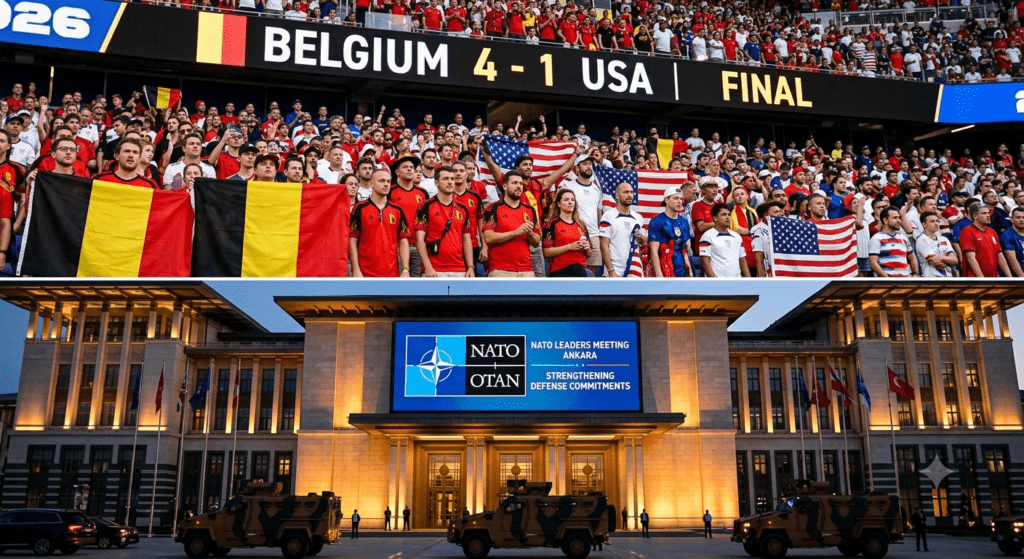
According to information reported by Reuters, the United States’ 4-1 defeat to Belgium took place amid wider discussions about political influence and the impact that statements from world leaders can have on major sporting events. The match was analyzed not only because of the result on the field but also because of the broader international context surrounding the competition.
The World Cup as a Political Stage
The World Cup has always extended beyond football. From diplomatic moments to social movements, the tournament has frequently served as a global platform where countries present their image, values and ambitions.
The United States’ role as one of the host nations increased attention around the tournament. Expectations were high that the American team could represent a new stage in the growth of football in the country, supported by investments in infrastructure, the expansion of domestic competitions and rising public interest.
However, the early elimination raised questions about sporting performance while also creating new debates about the relationship between politics and international competitions.
According to ACT News analysis, one of the biggest challenges for modern sporting events is maintaining a clear separation between athletic competition and political disputes. Fans should remain at the center of the spectacle, while governments and officials must avoid turning matches into extensions of diplomatic conflicts.
Belgium Seizes the Opportunity and Shows Its Strength
On the field, Belgium took advantage of its opportunities and confirmed its reputation as one of Europe’s competitive football nations.
The 4-1 victory placed the Belgian team in the spotlight and reinforced a trend seen in recent World Cups: traditional football powers are facing increasingly strong competition from countries that have invested in player development, sports technology and long-term planning.
The United States’ elimination also highlights an important lesson: financial investment alone does not guarantee success.
Football development requires technical preparation, competitive experience, youth systems and a strong sporting culture.
Politics Returns to the Sporting Debate
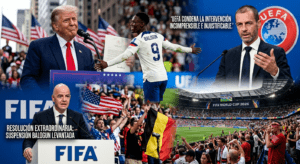
The attention surrounding Donald Trump during the World Cup revived an old question: how much influence should political leaders have over major sporting events?
History provides many examples of governments using international competitions as tools for communication, diplomacy and national image-building. At the same time, sporting organizations attempt to maintain independence in order to protect the credibility of competitions.
FIFA has repeatedly emphasized the importance of sporting autonomy and the independence of refereeing decisions, according to international media reports.
For ACT News, the key issue is not only one individual or one specific controversy, but a larger transformation: major global events have become arenas where influence and public narratives are contested.
Whoever shapes the story around a tournament, ceremony or international competition also gains influence over global public opinion.
NATO Increases Defense Focus Ahead of Trump Meeting
While football dominated headlines, international security developments continued to attract attention.
NATO leaders announced major defense agreements worth tens of billions of dollars during meetings in Ankara, Turkey. According to Reuters, the announcements are part of efforts by allied countries to strengthen defense capabilities and respond to calls from the United States for greater European contributions.
The discussions are taking place during a period of major global security changes. The war in Ukraine, tensions in the Middle East and strategic competition between major powers have increased pressure on NATO members.
Europe Seeks Greater Military Independence
One of the central debates within NATO concerns Europe’s future role in its own defense.
For decades, many European countries relied heavily on American military capabilities. Today, discussions are growing around the need for increased investments in equipment, technology and domestic defense production.
The selection of Sweden’s Saab early-warning aircraft system, reported by Reuters, reflects a broader trend: European nations are seeking to strengthen their own defense industries and reduce external dependencies.
For ACT News, this shift does not necessarily represent a break with the United States. Instead, it reflects an attempt to create a more balanced security structure within the alliance.
Trump and the New Competition for Global Influence
Donald Trump’s political presence remains one of the most closely watched factors in international diplomacy.
His relationship with European allies, demands regarding military spending and direct negotiating style have changed traditional approaches to international relations.
For some countries, this strategy represents necessary pressure for greater responsibility within NATO. For others, it creates uncertainty about the stability of alliances that have existed for decades.
The current situation shows that American foreign policy remains one of the most influential forces shaping global decisions, from military security to international sporting events.
A Changing World: Sport, Diplomacy and Power
The World Cup and the NATO summit may appear to be separate topics, but they reveal the same reality: the world is experiencing a continuous competition for influence.
Sport represents identity, emotion and culture. Diplomacy represents security, economic interests and national strategy. In an era of instant communication, these areas are becoming increasingly connected.
The United States’ World Cup elimination, debates over political influence and new military agreements demonstrate that major powers are competing not only on football fields or diplomatic platforms.
They are competing for narratives, alliances and global influence.
For ACT News, the challenge in the coming years will be finding a balance between the strength of international institutions and the growing involvement of political leaders across different areas of society.
Football will remain a global passion. NATO will remain a central pillar of international security. But both demonstrate the same reality: in a connected world, no major decision happens in isolation.
Stay Connected
Follow ACT News for real-time updates, breaking stories, and in-depth coverage from around the world.
Never Miss a Story
Join our WhatsApp Channel and get breaking news straight to your phone.
Join WhatsApp Channel →